
King Hussein Bridge – Al Karama Crossing: The Transit Crisis as a Tool of Israeli Political Control

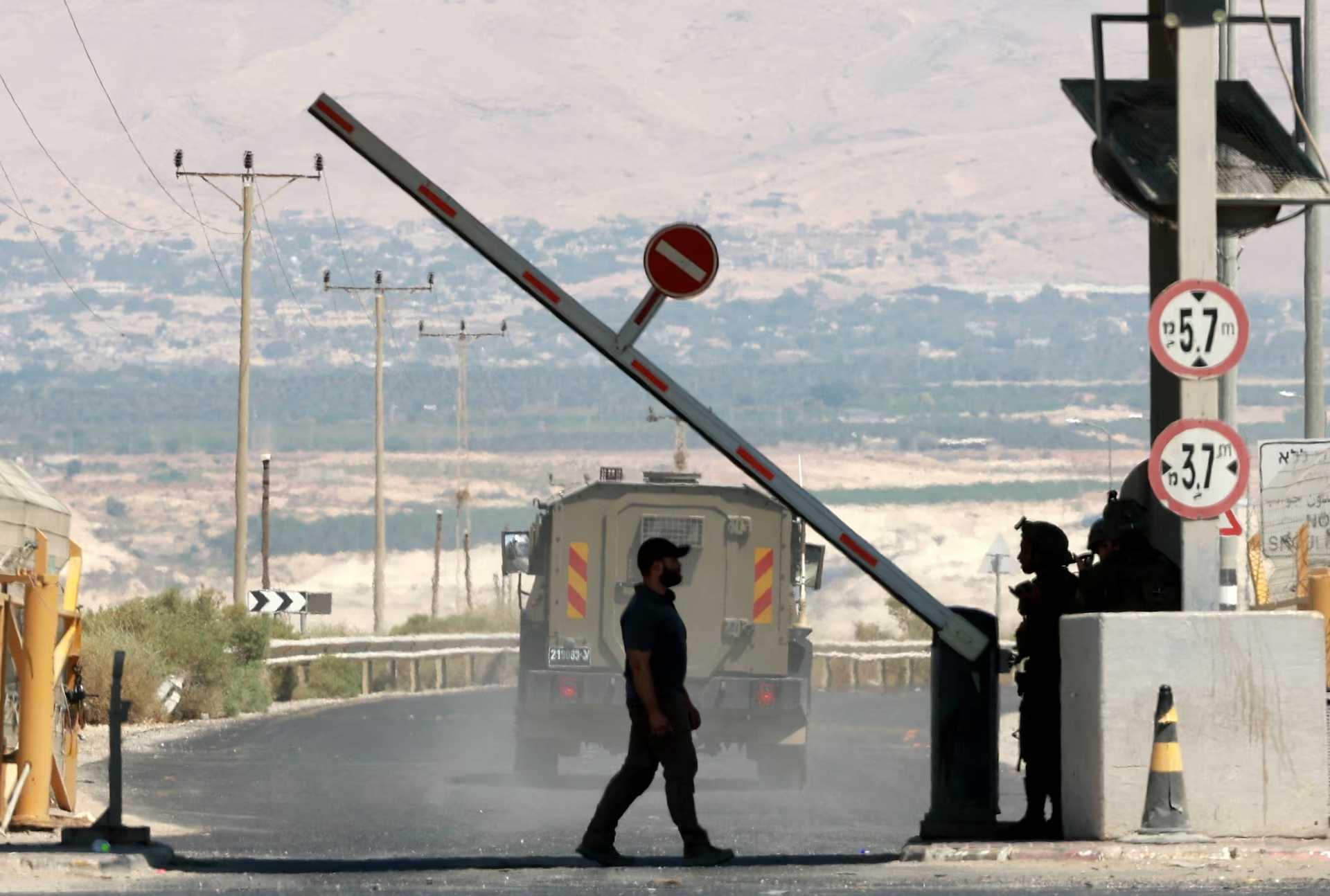
The escalating transit crisis at the King Hussein Bridge – Al Karameh (Allenby) Crossing—manifested in congestion, prolonged waiting lines, and repeated closures—demonstrates that it is not merely an operational malfunction detached from its political context. Rather, it constitutes a complex, layered crisis shaped by overlapping Israeli restrictions on movement and mobility through procedural controls (operating hours, number of buses, sudden closures). These constraints are further compounded by operational and service gaps on both sides of the crossing, alongside the emergence of an informal service economy—often involving bribery—that exploits limited service provision and time pressures on travelers.
At the operational level, the severity of the crisis intensifies during peak seasonal periods (holidays, Hajj and Umrah seasons, summer, and vacation periods), when demand surges and movement increases from both the Jordanian and Palestinian sides. This pressure is exacerbated by limited operating hours, the lack of a transparent and predictable queue management system, and the accumulation of travelers, all of which heighten friction at the crossing. Additional strain arises from the overlap between cargo and passenger traffic, insufficient staffing, limited processing lanes and internal services, as well as repetitive bureaucratic procedures (multiple queues and passport collection points).
Pre-booking platforms—particularly the Public Security Directorate’s system for departing passengers—and the VIP business-class booking service operated by JETT have shifted from organizational tools intended to alleviate congestion into sources of operational tension. This shift is linked to shortcomings in system design, governance, oversight, and unequal access to services among travelers. Accordingly, these mechanisms require urgent review based on user feedback and empirical data, with policy options ranging from comprehensive reform to temporary suspension if proven to exacerbate the crisis.
The paper argues that mitigating the crisis does not require waiting for a comprehensive political settlement, despite its structural roots in the broader context of occupation. Immediate internal margins of action can be activated to reduce humanitarian harm, curb exploitative practices, and improve service quality, alongside a structured diplomatic pressure track aimed at gradually extending operating hours, ultimately reaching 24-hour operation as a sustainable structural solution.
At a deeper level, the challenge lies not in the conceptual rationale behind these systems, but in deficiencies related to governance, design, and oversight. The common conclusion underscores the need for an urgent, data-driven review grounded in user experience, with the option of fundamental reform or scaling back and suspension if these systems are shown to deepen the crisis.
The paper recommends a set of phased interventions across short- and medium-term horizons, with full details available through the following link.
Your Attractive Heading